
Barolo and Barbaresco: A Guide to Nebbiolo’s Two Great DOCGs
Two villages either side of Alba, one grape, and the two most celebrated red wines of Piemonte.
Updated
One grape, two hillsides
Barolo and Barbaresco are both made entirely from Nebbiolo, a late-ripening red grape whose name is usually traced to nebbia, the autumn fog that settles over the Langhe hills at harvest. The two zones sit on either side of the town of Alba: Barolo to the south-west, Barbaresco to the north-east, along the Tanaro river.
Both were among the first Italian wines to receive DOCG status, the highest tier of the Italian classification. The rules of each denomination fix where the grapes may grow, that the wine is pure Nebbiolo, and how long it must age before release.
How the two differ
Barolo must age for at least 38 months before release, at least 18 of them in wood, and five years for a Riserva. Barbaresco must age for at least 26 months, at least 9 in wood, and four years for a Riserva. The longer minimum reflects the style: Barolo is generally the broader, firmer wine, Barbaresco the more perfumed and approachable one at the same age.
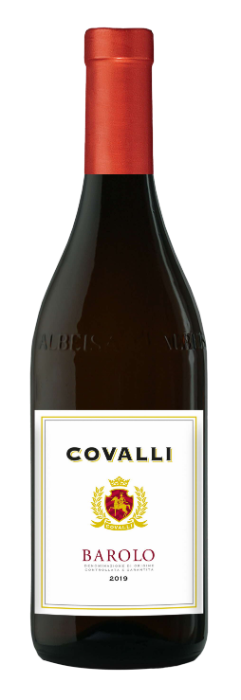
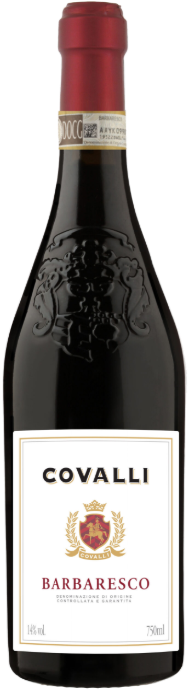
The Barolo zone covers eleven communes, among them La Morra and Verduno, where the grapes for Covalli Barolo are grown on clay and calcareous soil. Barbaresco is smaller, centred on the communes of Barbaresco, Neive and Treiso.
In the glass
Nebbiolo is pale for so serious a wine: garnet rather than purple, often with an orange rim as it ages. The scent is where it announces itself, with roses, red cherry, spice and tar, followed by firm tannin and bright acidity.
Covalli Barolo is ruby red, full and well balanced, with velvety tannins. Covalli Barbaresco is red garnet with orange highlights, an ethereal bouquet with hints of spice and almond, and a round, elegant, persistent finish.
At the table
Both wines want food with weight. Covalli Barolo is made for big red meat dishes, such as brasato (beef braised in red wine) or grilled meats, and for medium or mature cheeses. Covalli Barbaresco suits braised meats, mushroom risotto and blue cheese.
Serve both at 18 °C or a little above, in a large glass, and open the bottle a while before pouring: Nebbiolo opens up with air.